


 Few treatments in medicine have undergone such a dramatic transformation in reputation as botulinum toxin. Once feared solely as the cause of botulism, it is now one of the most precisely studied and refined therapeutic agents we use — not only in aesthetics, but in neurology, ophthalmology, urology, and pain medicine.
As a doctor who has worked with botulinum toxin for over 15 years, I remain impressed by its elegance at a molecular level.
Botulinum toxin type A is a purified neurotoxic protein derived from Clostridium botulinum. Its mechanism of action is highly specific. At the neuromuscular junction, motor nerves release acetylcholine — a neurotransmitter responsible for stimulating muscle contraction. Botulinum toxin cleaves SNARE proteins (specifically SNAP-25), which are essential for the fusion of acetylcholine-containing vesicles with the nerve terminal membrane.
Without acetylcholine release, the muscle cannot contract.
The result is temporary, controlled relaxation of targeted muscles.
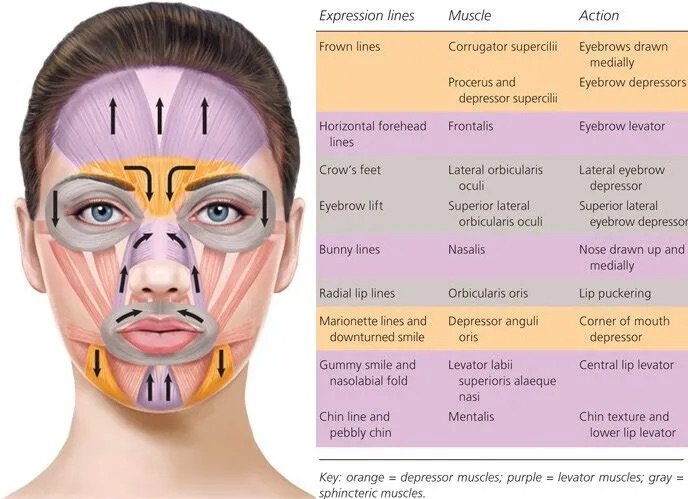
In aesthetic medicine, this allows us to soften dynamic lines — those formed by repetitive facial expression. Frown lines, forehead lines, and crow’s feet are not simply “wrinkles”; they are the cumulative result of thousands of muscular contractions over decades. By reducing this repetitive mechanical stress on the dermis, we prevent collagen from being continuously folded and creased.
It is both corrective and preventative.
One of the greatest misconceptions is that botulinum toxin “fills” lines. It does not. It modulates muscle activity. The smoothing effect occurs because the overlying skin is no longer being repeatedly compressed.
Precision matters enormously. Dosing is measured in units, and placement must respect anatomy. Over-treatment creates heaviness and unnatural stillness; under-treatment produces little benefit. True expertise lies in balancing muscle groups — understanding depressors and elevators — and preserving natural expression while softening excessive contraction.
There is also growing evidence that early, judicious use may slow the formation of static lines by reducing long-term collagen breakdown. However, it must always be tailored to the individual’s anatomy, age, and aesthetic goals.
Botulinum toxin typically begins to take effect within 3–5 days, with peak effect at around two weeks. Results last approximately 3–4 months, depending on metabolism, muscle strength, and dosing. Resistance is rare but possible, usually linked to very high cumulative dosing or inappropriate treatment intervals.
Importantly, botulinum toxin is one of the most studied medications in the world. When administered by an experienced medical practitioner with deep anatomical knowledge, it has an excellent safety profile.
It is not about freezing a face.
It is about intelligent modulation.
When performed correctly, people should simply say: “You look well.”
Subtle. Balanced. Refreshed.
That is the art — grounded in science.
